Trick Questions to Ask Prior To Choosing Senior Care
Business Name: BeeHive Homes of Draper
Address: 711 Pioneer Rd, Draper, UT 84020
Phone: (801) 495-3100
BeeHive Homes of Draper
Full service assisted living facility serving southern Salt Lake County offering all-inclusive Memory Care, Assisted Living, and Senior/Adult Day Care services.
711 Pioneer Rd, Draper, UT 84020
Business Hours
Choosing senior care is hardly ever a simple decision, even when everybody included concurs that aid is needed. The difficult part is not identifying that assistance would certainly serve. The difficult part is deciding what kind of support, how much, and from whom. A family members might begin by searching for senior care near me and quickly discover that the phrase covers a variety of choices, from in-home help to assisted living, memory care, and temporary respite care. That selection can be comforting, however it can likewise make the search feel overwhelming.
The appropriate option depends upon more than accessibility. It depends upon health and wellness needs, personality, day-to-day regimens, spending plan, family members logistics, and the sort of atmosphere that will feel secure as opposed to institutional. An excellent senior living area can sustain independence for several years. An inadequate fit can leave an older adult irritated, separated, or in danger. Households often concentrate on price first, yet the more useful starting factor is asking the ideal concerns, the ones that expose whether a setting genuinely matches the person that will certainly live there.
Start with the person, not the brochure
Before contrasting assisted living neighborhoods or scanning alternatives for assisted living near me, it aids to slow down the process down and look carefully at the older adult's actual requirements. A lot of families begin with a facility tour and just later realize they were asking the incorrect inquiries. A stunning entrance hall does not inform you whether somebody will obtain aid reaching dishes promptly, whether medicines are monitored, or whether the staff understands just how to handle rising and fall mobility.
The best conversations start at home, typically with a blunt however considerate evaluation of every day life. Can your loved one bathe securely without assistance? Are they forgetting medicines? Have there been drops, unusual weight-loss, missed out on appointments, or indications that dishes are being missed? Are they lonesome, bored, or nervous? These details matter because senior care should address the real issue, not one of the most visible one.
A widow who still drives yet is forgetting to pay expenses may require something very different from someone with sophisticated arthritis who can no more take care of stairways. A retired engineer that values personal privacy might have a hard time in a loud, very social setting, while one more older grownup might come active with group activities and shared dining. There is no universal response, only a far better or worse fit.
What degree of care is actually needed?
One of the initial inquiries to ask any supplier is easy: what level helpful can you reasonably deliver? The solution establishes whether the setup is appropriate.
Assisted living is typically a good suit for a person who requires assist with activities of daily living such as showering, dressing, dishes, transport, or medicine reminders, however does not need extensive treatment around the clock. That difference issues. Families occasionally think assisted living features like a nursing home with a softer name, when actually the solutions and staffing are various. If the individual requires frequent skilled nursing interventions, facility wound care, or continuous tracking, a higher degree of care may be more appropriate.
It is also worth asking just how requirements are reassessed gradually. Someone may enter assisted living fairly independent and later establish dementia, movement issues, or swallowing issues. A solid senior living carrier should be able to explain when homeowners are no more a suitable for that setup and what happens next. You do not want to uncover after move-in that the community can no longer sustain the resident as needs increase.
This question comes to be a lot more vital when a household is considering respite care. Temporary stays can be useful after a medical facility discharge, throughout a caregiver holiday, or when a household needs a break, but the facility still requires to understand the individual's present level of function. A one-week respite stay can go badly if the area is not gotten ready for falls risk, medication timing, or nighttime confusion.
How does the staff assistance everyday life?
Good senior care is usually much less concerning attractive amenities and more regarding the rhythm of common days. That is why it is worth asking detailed concerns about how team really work. Who aids homeowners get up in the early morning? Exactly how swiftly do they respond when somebody requires help to the shower room? How are meals delivered, and what takes place if a resident refuses to consume? Are drugs passed by certified team or delegated assistants? How are late-night demands handled?
These are not unimportant information. They form whether a resident feels safe and secure or overlooked. I have actually seen family members obtain attracted by marketing language about wellness and hospitality, only to discover later that staffing patterns made it hard for citizens to get prompt aid during height hours. A neighborhood can be warm and caring in spirit, yet still fall short if the staffing design is also thin for the number of citizens it serves.
Ask regarding personnel turn over too. A stable group typically signals far better continuity and even more reliable care. When staff remain, they learn resident routines, interaction designs, and refined changes in problem. When turn over is high, families may need to duplicate the very same information over and over, and homeowners can feel disoriented by a parade of strange faces.

It is also useful to ask just how team are educated to work with amnesia, stress and anxiety, diabetes mellitus, wheelchair restrictions, and hearing impairment. An excellent answer should sound particular, not unclear. "We train every person to treat locals with regard" is a great view. It is not the like claiming exactly how team redirect a baffled resident, monitor skin stability, or deal with a missed meal.
What does a typical day look like?
Many family members inquire about activities, which is reasonable, but the deeper inquiry is what the day really feels like. A resident can be surrounded by activities and still feel invisible if the routine is rigid, noisy, or mismatched to their energy level. The appropriate concern is not simply whether there are points to do. It is whether the setting urges participation without compeling it.
Ask when meals are served, how versatile the routine is, and whether homeowners can pick to sleep late or eat in their rooms when required. Some older adults prosper in an organized regimen, specifically if cognition is decreasing. Others require some versatility to protect dignity and convenience. The most effective senior living communities normally stabilize both.
If you tour in the mid-day, focus on the mood in the structure. Are individuals involved, relaxing, strolling, going to, or sitting alone for extended periods? Do citizens seem known by name? Do staff welcome individuals normally, or does the place seem like a hotel where no one fairly belongs? Those perceptions are not clinical, yet they matter. They usually reveal whether the community has the pulse of reality or simply a sleek sales presentation.
How are medical problems handled?
Even in assisted living, clinical concerns at some point occur. Chronic problems do not stop at the front workdesk. Ask that coordinates with physicians, how drug modifications are connected, and whether transport to consultations is readily available. If your loved one takes multiple prescriptions, learn just how the drug system is organized and what happens when a pharmacy delay occurs.
You must likewise ask how the neighborhood handles emergency situations. If a resident falls, that reacts initially? If somebody ends up being disoriented or short of breath, what is the rise process? Does the area call household instantly, or only after a review by a registered nurse or supervisor? These treatments reveal whether the personnel is ready or simply reactive.
Families frequently focus on immediate safety, however there is another layer to think about: communication. A neighborhood can offer respectable care and still leave families really feeling shut out. Ask exactly how updates are shared, who serves as the main point of contact, and just how problems are recorded. If you have actually ever tried to figure out a medication issue with 3 various individuals by phone, you already know why this matters.
A relevant question is whether the community can support changing health requirements gradually. A person going into senior care with mild mobility restrictions might later on require a pedestrian, even more reminders, or help after surgical procedure. A supplier that can adapt without dramatization is typically worth greater than one that is a little cheaper however rigid.
What does the setting feel like?
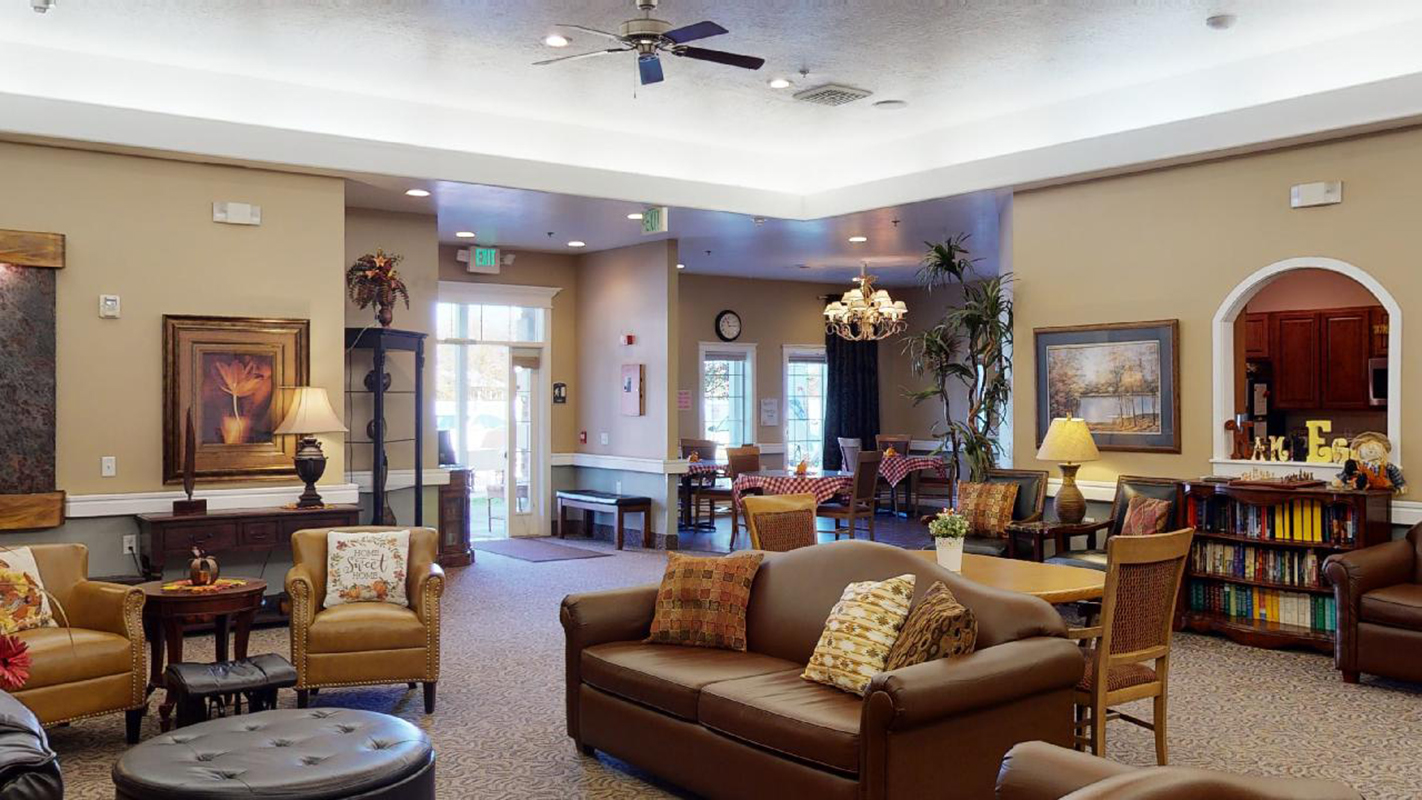
People often talk about location and price first, yet the physical environment can assisted living form day-to-day quality of life greater than either of those. Hallways should be very easy to navigate. Lighting needs to be good. Bathrooms need to have safety features that are really practical, not just decorative. Usual rooms should invite use as opposed to really feel staged for a tour. If your loved one utilizes a wheelchair or pedestrian, attention to layout comes to be especially important.
Ask whether the structure has secure entryways, outside access, and areas that permit peaceful conversation. For numerous older adults, a small patio or yard can matter as much as a dining-room. Ask whether residents can customize their areas. Familiar furniture, photos, and books often help a new space really feel much less alien.
If you are contrasting communities, notice not simply tidiness however wear. A well-kept structure will show signs of use, but not overlook. Carpetings need to not be torn in high-traffic areas. Bathrooms must scent clean, not covered up by hefty scent. Elevators must work accurately. These information sound standard since they are standard, and basic things are what make daily life safer.
How much does it really cost?
Cost is where households frequently get tripped up. The month-to-month price priced estimate in a sales brochure may not consist of all solutions. Ask specifically what is consisted of and what contributes to the expense. Does the base price cover meals, washing, house cleaning, transport, drug support, or individual care? Are there tiered charges based on care needs? Exists a second-person cost for support with transfers? What takes place if the resident's care level adjustments after a couple of months?
It is likewise worth asking about deposits, move-in costs, and annual increases. A community that seems economical initially can come to be pricey as soon as extra solutions are added. Family members should request a sample month's expense, not just a price sheet. That one record often exposes truth price structure more plainly than any kind of sales conversation.
When comparing assisted living options, price should be weighed versus fit and stability. The least expensive choice is not always one of the most economical if it results in repeated medical facility visits, inadequate nutrition, or family fatigue. Furthermore, a greater month-to-month rate may be practical if it consists of solutions that would or else call for a number of separate providers.
For family members stabilizing job, kids, and caregiving, respite care can be a functional monetary bridge. A short remain can aid protect against caregiver exhaustion or give everybody time to review whether a longer step makes good sense. It is frequently much less disruptive to examine a neighborhood through respite care than to devote instantly to an irreversible move.
Questions that are very easy to neglect, yet hard to repair later
Some of one of the most important concerns are the ones people do not believe to ask until after move-in. Can a resident bring a pet? Are going to hours flexible? Can family sign up with dishes? Is there a policy for locals that roam, reject care, or come to be hostile? What is the process if the resident no longer wants to participate in bathing or drug regimens? Just how are hospice solutions handled if that time comes?
These inquiries may feel unpleasant, yet they belong to honest planning. A thoughtful company will not be stunned by them. They will describe the plan, the limitations, and the interaction process without defensiveness. That normally informs you more than a glossy sales brochure ever before could.
It is additionally practical to ask what occurs if the fit is not right. Can the resident transfer to another degree of care within the very same senior living campus? Is there a waiting list for memory care? If the family determines the positioning is wrong, what notice is needed? These issues are painful to picture, yet they are simpler to take care of when talked about before a crisis.
When the choice is emotional in addition to practical
Even a great senior care decision can seem like a loss. Adult kids might wrestle with sense of guilt. Older grownups may fear being displaced or failed to remember. A spouse might fret about shedding the everyday routines that made a marriage feel consistent. These emotions are not side issues. They influence the transition.
That is why tone issues during the search. A strong provider ought to be able to address questions without making a family members really feel hurried or crazy. They must recognize that relocating right into senior care is not simply a deal. It is a modification in identification, regular, and autonomy. The best areas make room for that truth instead of attempting to smooth it over with cheerful marketing.
Sometimes the most effective next step is not an irreversible action however a trial stay. A brief respite care placement can expose just how the person consumes, rests, and connects in a new setting. It can also reveal whether family members assumptions match reality. I have actually seen family members discover more in two weeks of respite than they found out in 6 months of searching online for senior care near me. Reality has a way of clarifying what brochures cannot.
A practical means to compare options
When households visit a number of communities, the details blur with each other swiftly. One location looks brighter. One more has far better food. A third has a much more conscientious manager. What assists most is consistency in the inquiries you ask. If you are comparing assisted living neighborhoods, try to use the same collection of worries at each visit so your impacts are grounded in substance instead of atmosphere.
A simple contrast normally becomes more clear when you focus on a handful of issues: the quality of day-to-day assistance, personnel stability, care versatility, true monthly cost, and whether the area really feels considerate to the resident. That is often better than trying to rack up every amenity. A refined movie space does not offset inadequate feedback times. A lower rate does not aid if the environment is chaotic. And a pleasant salesman does not guarantee excellent care.
The right senior care setup need to sustain both safety and dignity. It ought to help the resident feature better without removing the routines that make them feel like themselves. That balance is hard to attain, which is why the questions you ask before picking issue so much. They expose not just what a neighborhood offers, however whether it comprehends the older adult overall individual, not just a collection of needs.
BeeHive Homes of Draper provides assisted living care
BeeHive Homes of Draper provides memory care services
BeeHive Homes of Draper provides respite care services
BeeHive Homes of Draper supports assistance with bathing and grooming
BeeHive Homes of Draper offers private bedrooms with private bathrooms
BeeHive Homes of Draper provides medication monitoring and documentation
BeeHive Homes of Draper serves dietitian-approved meals
BeeHive Homes of Draper provides housekeeping services
BeeHive Homes of Draper provides laundry services
BeeHive Homes of Draper offers community dining and social engagement activities
BeeHive Homes of Draper features life enrichment activities
BeeHive Homes of Draper supports personal care assistance during meals and daily routines
BeeHive Homes of Draper promotes frequent physical and mental exercise opportunities
BeeHive Homes of Draper provides a home-like residential environment
BeeHive Homes of Draper creates customized care plans as residents’ needs change
BeeHive Homes of Draper assesses individual resident care needs
BeeHive Homes of Draper accepts private pay and long-term care insurance
BeeHive Homes of Draper assists qualified veterans with Aid and Attendance benefits
BeeHive Homes of Draper encourages meaningful resident-to-staff relationships
BeeHive Homes of Draper delivers compassionate, attentive senior care focused on dignity and comfort
BeeHive Homes of Draper has a phone number of (801) 495-3100
BeeHive Homes of Draper has an address of 711 Pioneer Rd, Draper, UT 84020
BeeHive Homes of Draper has a website https://beehivehomes.com/locations/draper/
BeeHive Homes of Draper has Google Maps listing https://maps.app.goo.gl/LgtrXf95hQFVgKrY8
BeeHive Homes of Draper has Facebook page https://www.facebook.com/BeeHiveDraper/
BeeHive Homes of Draper won Top Assisted Living Homes 2025
BeeHive Homes of Draper earned Best Customer Service Award 2024
BeeHive Homes of Draper placed 1st for Utah Senior Living Communities 2025
People Also Ask about BeeHive Homes of Draper
What is BeeHive Homes of Draper Living monthly room rate?
Our monthly rates for both Assisted Living and Memory Care at BeeHive Homes of Draper are thoughtfully designed to be all-inclusive. While pricing reflects each resident’s unique care needs, families appreciate that once a rate is established, it remains stable - no hidden fees or surprise increases as care evolves. We believe in clarity, consistency, and peace of mind
Can residents stay in BeeHive Homes of Draper until the end of their life?
In many cases, yes. We are honored to support residents throughout their journey, including end-of-life care, right here in the comfort of our Draper home. There are rare occasions when medical needs exceed our licensing (such as 24-hour skilled nursing) but we’ll always guide families through any transition with care and compassion
Do we have a nurse on staff?
Yes, we do. Our Registered Nurse, Jacque Parker, R.N., works closely with local home health nurses and house-call physicians to coordinate excellent care. This collaboration allows us to meet a wide range of health needs right here at home
What are BeeHive Homes of Draper's visiting hours?
We know how important it is to stay close to loved ones. That’s why visiting hours at our Draper home are flexible and designed around what works best for the resident. You’re welcome to visit during the day... just try not to come to early and stay too late
Do You Offer Rooms for Couples?
Yes, we do! BeeHive Homes of Draper offers select suites for couples who wish to continue living together while receiving care. These shared accommodations preserve comfort and connection while ensuring both individuals get the personalized support they need. Availability is limited, so reach out to learn more
Do You Provide Senior Day Care or Respite Services?
Absolutely. Our senior day care and short-term respite care options are perfect for families who need extra help during the day or while traveling. Guests enjoy the same high-quality care, engaging activities, and home-cooked meals as our full-time residents, all in a safe, social environment. We’ll help you find a care plan that fits your schedule and your loved one’s needs.
What’s the Difference Between Assisted Living and Memory Care?
Assisted living is best for seniors who benefit from help with daily activities but still enjoy socializing and independence. Memory care is a more structured service tailored to individuals with Alzheimer’s or other cognitive conditions, with routines, guidance, and security that support safety and emotional well-being.
Where is BeeHive Homes of Draper located?
BeeHive Homes of Draper is conveniently located at 711 Pioneer Rd, Draper, UT 84020. You can easily find directions on Google Maps or call at (801) 495-3100 Monday through Sunday Open 24 hours
How can I contact BeeHive Homes of Draper?
You can contact BeeHive Homes of Draper by phone at: (801) 495-3100, visit their website at https://beehivehomes.com/locations/draper/ or connect on social media via Facebook
The Draper Historical Society provides an engaging local history experience that families enjoying Assisted living, memory care, senior care, elderly care, and respite care often appreciate.